
Accessing a Casinoly Casino account is meant to be a uncomplicated process that allows players quickly get to their preferred games and handle their funds https://casinolyapp.com/en-ie/login. The login experience begins well before the first wager, with a distinct registration path and a safe verification routine created to protect every user. This guide details each stage of the account lifecycle, from setting up credentials and completing identity checks to signing in confidently and overcoming common access issues. Readers will discover what information is needed at sign-up, which documents assist with the know‑your‑customer procedure, how to reset a forgotten password, and how to strengthen account protection with two‑factor authentication. The content keeps based in the actual steps a player in Ireland will face on the Casinoly platform, without speculation or exaggeration.

Typical Login Issues and Ways to Fix Them
Incorrect Credentials and Caps Lock
The most common barrier at the login screen is a simple mismatch between the typed password and the recorded one. Passwords are case‑sensitive, so an accidental caps lock key or a shift‑key slip can cause multiple failures. Before concluding the password is lost, the player should type it slowly into a plain text editor to check for hidden capitalisation errors and then paste it into the password field. The email address must also be entered exactly as registered; a missing dot or a different domain extension will stop the system from recognising the account. If the player has several email addresses, trying each one methodically can clear the confusion. After several fruitless attempts, the account may become briefly locked as a security measure, which is covered in the next section.
User Account Temporarily Locked
Casinoly’s security system monitors login tries and might impose a short cooling‑off period after a burst of invalid entries. This restriction is not a permanent ban but a protective pause that generally lasts from a quarter of an hour to an hour. During this time, even the correct password will be rejected. The player should pause for the lock to end automatically rather than trying to change the password right away, because a reset demand might also be stopped while the account is in a blocked state. If the block continues beyond the expected window, contacting customer support through live chat is the quickest remedy. The support staff member can authenticate the player’s details through other means and by hand lift the block, after which the standard login procedure continues.
System Glitches – Clearing Cache and App Updates
At times the obstacle is not necessarily the credentials but the device or browser storing stale data. A faulty cache or a expired cookie can cause the login page to loop back without an error message. Deleting the browser’s cache and cookies for the Casinoly domain often resolves the issue instantly. read the report On the mobile app, an old version may conflict with the server’s security protocols, so looking for the app store for pending updates is a sensible step. Moving to a different browser or trying incognito mode can also identify whether a browser extension is interfering. If the problem appears to be server‑side, the casino’s status page or social media channels will typically mention any ongoing maintenance. In the absence of a widespread outage, a stable login experience comes back after these local adjustments.
Grasping the User Verification Procedure
Reasons Verification Matters
Account verification, frequently called KYC or know‑your‑customer, is a compulsory step that Casinoly Casino enforces to satisfy licensing requirements and to protect its community. The procedure confirms that the person behind the account is a genuine, eligible adult and not someone using fraudulent or fabricated details. For the player, a verified account unlocks unrestricted deposits, faster withdrawals, and access to the entire range of promotions. Without verification, the casino may apply lower transaction limits or pause a withdrawal request until the checks are satisfied. The process also protects the player by guaranteeing that no one else can impersonate them and request a payout. Casinoly’s security team processes the submitted documents in a private manner, saving them on encrypted servers and deleting them after the retention period required by law.
Files Typically Required
To complete verification, the player will need to provide a sharp, colour copy of a government‑issued photo ID like a passport, driver’s licence, or national identity card. The document must show the full name, date of birth, photograph, and expiry date, and all four corners of the card need to be visible in the image. A second document proving the residential address is typically required; a recent utility bill, bank statement, or official government letter dated within the last three months is acceptable. In some cases, the casino requests proof of ownership of the payment method used for deposits. For card payments, this means uploading a photo of the front of the card with the middle eight digits covered, leaving only the first six and last four digits visible, along with the name and expiry date. E‑wallet users might be asked to share a screenshot of their account profile showing the registered email address.
Verification Timeline and Follow-Up
Once the necessary files are provided through the protected document centre in the account area, the verification usually takes between 24 and 48 hours. During peak periods or when extra clarity is required, the wait may increase slightly, but the support team will alert the player if any new submission is required. An email notice arrives as soon as the documents are accepted, and the account status changes immediately. If a player receives a request for additional information, answering promptly helps avoid further delays. It is advisable to refrain from making large deposits right before verification is due, because any withdrawal attempt will be paused until the checks complete. Casinoly’s support agents can give a status update via live chat if laws-lois.justice.gc.ca the process appears to be taking longer than planned, and they will clarify exactly what is missing without compromising security protocols.
Logging In to Your Casinoly Account Securely
The login page, reachable directly through the Casinoly website or the dedicated mobile app, presents a clean interface with fields for the registered email or username and the password. Entering these credentials correctly is the first gateway, but the environment around the login matters just as much as the keystrokes. Players should always verify that the URL begins with the official domain and that the connection is encrypted, indicated by the padlock symbol. Public Wi‑Fi networks, such as those in cafés or airports, are risky because they can reveal login data to eavesdroppers; using a private, password‑protected connection is a safer habit.
After the credentials are accepted, the player lands on the account dashboard where the balance, active bonuses, and game categories are immediately visible. Casinoly’s platform may include a “remember me” option on trusted personal devices, which stores a secure token so that the user does not have to re‑enter the password every time. This convenience should be used only on a device that no one else can access. Logging out after each session, especially on shared or public computers, remains a fundamental security practice. The logout button is always found in the account menu, and clicking it terminates the session completely, preventing anyone from pressing the back button to re‑enter the account.
Recovering a Forgotten Password or Username
Changing Your Password
Misplacing a password is a typical frustration, and Casinoly has built a simple recovery flow to handle it. On the login screen, the “Forgot Password?” link sits just below the password field. Clicking it triggers a prompt where the player types the email address linked with the account. Within a few minutes, an automated message arrives containing a unique reset link. That link is time‑sensitive and will time out after a short window, typically around thirty minutes, so the player should act on it promptly. Accessing the link directs to a secure page where a new password can be set, following the same complexity rules as during registration. If the email does not show up in the inbox, examining the spam or junk folder is the first troubleshooting step, because aggressive filters sometimes misdirect automated casino mail.
Finding a Forgotten Username
If a player cannot remember which email address or username they used to register, the recovery path depends on the support team. The login page does not always have a dedicated username recovery tool, but the live chat feature is available without signing in. By providing the full name, date of birth, and possibly the last four digits of the registered payment card, the support agent can find the account and verify the correct login identifier. This manual check functions to prevent unauthorised individuals from searching for account details. Once the correct email is confirmed, the player can continue with the password reset if needed. Keeping a record of the registered email in a secure place, such as a password manager, avoids this situation entirely and accelerates future logins.
Enhancing Account Security with 2FA Authentication
Steps to Activate 2FA
Two‑factor authentication provides a second credential layer beyond the password, rendering an account far more secure to takeover attempts. Casinoly Casino enables 2FA through TOTP one‑time password apps, which is a more reliable method than SMS codes because it is not exposed to SIM‑swap attacks. To set up it, the player goes to the security settings within the account dashboard after logging in. The option to enable two‑factor authentication is clearly indicated, and selecting it presents a QR code on screen. The player reads this code with an authenticator app such as Google Authenticator, Authy, or Microsoft Authenticator, which instantly connects the account to the app. A six‑digit verification code created by the app must be input on the Casinoly page to verify the setup, and from that moment onward, the code will be required at every login.
Employing an Authenticator App for Login
Once 2FA is active, the login sequence shifts slightly. After inputting the correct email and password, the site halts and prompts for the current six‑digit code from the authenticator app. These codes renew every thirty seconds, so the player must launch the app and enter the displayed digits before they expire. If the code is typed incorrectly, a new one can be produced and used again. The small extra step needs only a few seconds but prevents anyone who has obtained the password through phishing or data leaks. Players should keep the backup codes that Casinoly provides during the 2FA setup in a safe offline location; these one‑time codes can be used to recover access if the phone with the authenticator app is stolen or reset. Without backup codes, account recovery becomes a manual process that requires contacting support and passing identity verification again.
Creating a New Casinoly Account – Detailed Guide
Requirements and Preparation
Before accessing the registration form, a future player must confirm they satisfy the basic eligibility criteria set by Casinoly Casino. The operator requires every user to be at least eighteen years of age, which aligns with the legal gambling age in Ireland. A consistent internet connection and a active email address are necessary, because all account communication, including the verification link and withdrawal confirmations, will be sent to that inbox. It is also advisable to have a government‑issued photo identification document ready, as the casino will require it during the verification stage. Casinoly Casino is run by a company that has a recognised Curacao eGaming licence, which means the registration process follows standard international anti‑fraud and responsible gambling protocols. Players who utilize a VPN should evaluate disabling it for the time being, as location mismatches can sometimes activate additional security checks during sign‑up.
Completing the Registration Form
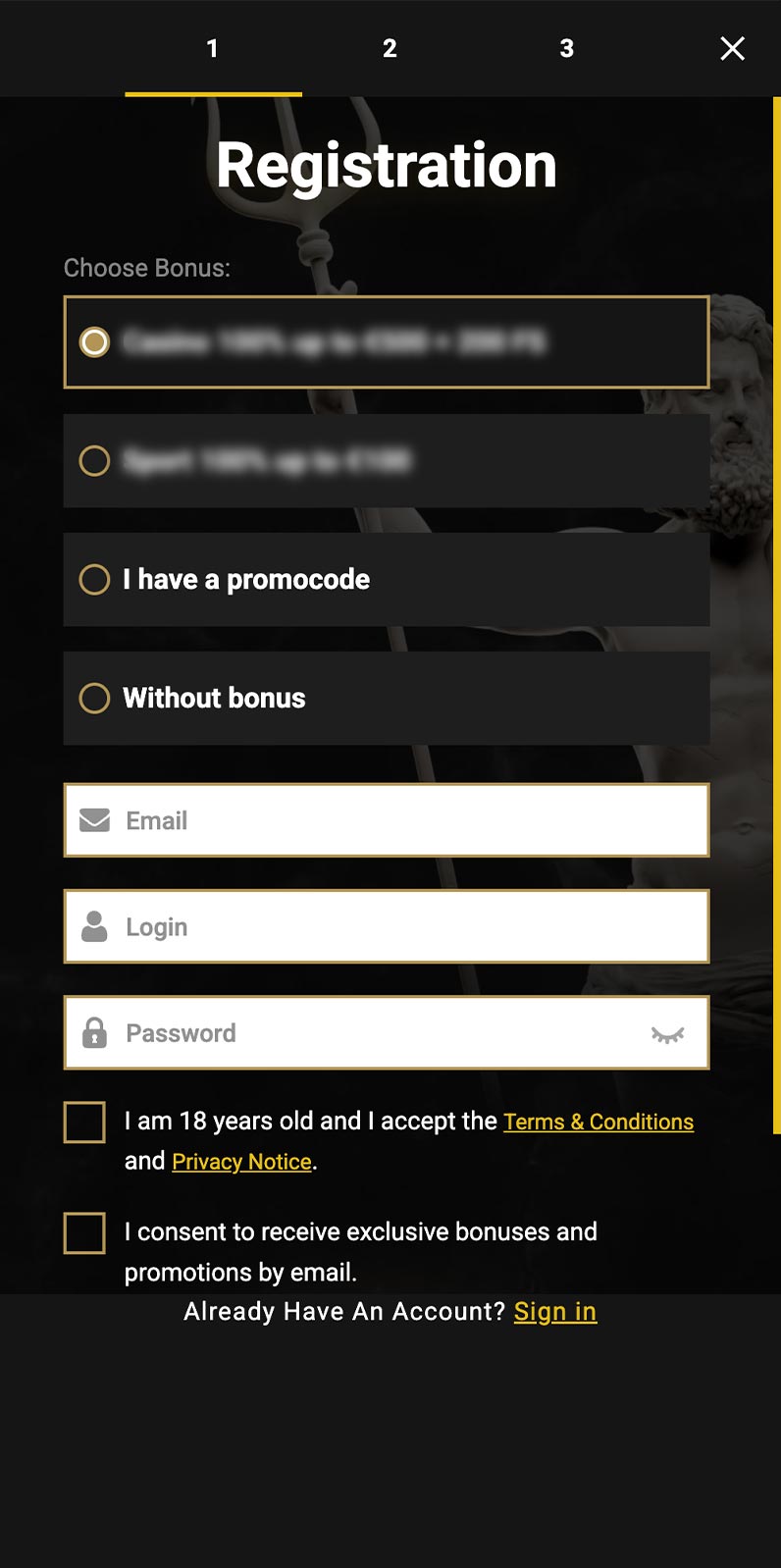
The registration form on the Casinoly login page requests the personal details that form the foundation of the account. A new user is required to input their full legal name exactly as it appears on their identification documents, because discrepancies may hinder verification later. The form also requests a date of birth, a residential address including postcode, a mobile phone number, and the preferred currency for deposits and play. Selecting the correct currency at this stage is important, as changing it after the account is active might not be straightforward. The casino employs this information to tailor the gaming experience and to comply with anti‑money laundering regulations. All data transmitted through the registration page is encrypted with SSL technology, visible as a padlock icon in the browser address bar, so personal details are protected from interception during submission.
Setting Your Login Credentials
The last step of the sign‑up flow requires the gambler to select a distinctive username or to use their email address as the sign‑in name, depending on the existing interface. A secure password needs to be set up that meets the platform’s complexity rules, usually a least of eight characters combining upper‑ and lower‑case letters, at least one number, and a special symbol. Repurposing a password from another service is highly advised against, because a breach elsewhere could reveal the casino account. After acknowledging the terms and conditions and verifying that the given details are precise, the player files the form. An instant email arrives within minutes containing a activation link; tapping it activates the account and permits the first login. At this point the player can deposit funds and discover the game library, though total account functionality remains limited until identity verification is completed.
Managing Your Account Post Login
Modifying Personal Information and Settings
When inside the account, the member has full authority over personal data and communication preferences. The profile section permits changes to the email address, phone number, and residential address, however any alteration to core identity details may prompt a re‑verification request to maintain the account protected. Players can also set their preferred language and odds format, and decide whether to receive promotional emails or SMS notifications. Ensuring contact details accurate is important because withdrawal approvals and security alerts are based on accurate data. The account dashboard also shows the current VIP or loyalty tier, when appropriate, along with any active bonuses and their wagering progress. Examining these details periodically enables the player remain informed about their status and any upcoming conditions.
Setting Deposit Limits and Responsible Gambling Measures
The Casinoly site offers a safe gaming toolkit that can be accessed right away after login. Within the account settings, a player can impose daily, weekly, or monthly deposit limits that cannot be raised without a cooling‑off period. Session time reminders can be turned on to pop up after a specified number of minutes, assisting the player keep track of how long they have been playing. For those who need a longer break, the self‑exclusion option restricts access to the account for a set period, from six months up to five years. Activating any of these tools does not require contacting support; the changes take effect instantly. The casino also offers links to external support organisations such as GamCare and Gambling Therapy, underscoring its commitment to player wellbeing.
Checking Transaction History and Withdrawals
The cashier section, accessible after login, holds a full record of every deposit, bonus, wager, and withdrawal. Players can organize the transaction history by date range and type, which is useful for budgeting or for providing documentation to financial institutions. To submit a withdrawal, the player picks the preferred payment method, enters the amount, and submits the request. The processing time depends on the method chosen, with e‑wallets typically being the fastest and bank transfers taking a few business days. Any pending verification requirements will be highlighted at this stage, so it is wise to complete KYC before accumulating a large balance. After a withdrawal is processed, its status refreshes in real time within the transaction log, and an email notification acknowledges when the funds have been released. Logging out securely after managing finances assures the session is fully closed and no sensitive data remains exposed.
